

以下文章来源于生物化学与生物物理进展 ,作者PIBB
Progress in Biochemistry and Biophysics
Journal promotion, providing mobile login services for authors and reviewers
I don't know every sentence, I'm confused and puzzled.
Han Yu's "Teacher's Discourse"
Proteins are the main carriers of life activities and participate in almost all biochemical processes within living organisms. Proteins fold from their primary structure into specific three-dimensional structures to possess biological activity and subsequently exert their functions. So how do proteins fold from one-dimensional amino acid chains into three-dimensional spatial structures?
In the late 1950s, American biochemist Christopher Anfinsen proposed a hypothesis that the amino acid sequence of a protein contains all the information about its natural structure, which is its thermodynamically most stable state. This hypothesis is still the only widely accepted theory regarding protein structure and folding. Anfensen was also awarded the Nobel Prize in Chemistry in 1972 for this. In recent years, experimental research has found that the natural active state structure of some proteins is not their thermodynamically stable state, and protein sequences are still like a heavenly book, "unclear and confused". In 2005, the protein folding problem was listed as one of the 125 unsolved scientific problems by the journal Science.
Protein local structure and fragment grafting
Scientists have always hoped to find patterns that correspond the local amino acid sequences of proteins to their three-dimensional structures. However, the vast majority of protein fragments, as independent peptides, do not have stable structures, which means that the entire protein sequence may affect the structure of local fragments. On the other hand, some protein fragments can be grafted onto a completely different protein skeleton while maintaining their original structure and function, indicating that local peptide fragments can also adopt the same structure in the "context" of different protein sequences. The most typical example is the humanization of antibodies, which involves transplanting the complementary determining region (CDR) sequence of mouse antibodies onto human antibodies (Figure 1) [2-3].
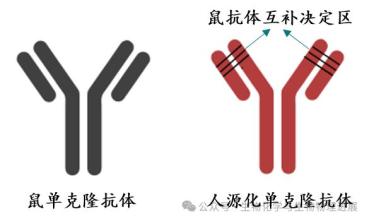
Figure 1 Schematic diagram of humanized antibody
Professor Cao Aoneng's team at Shanghai University has developed a conformational engineering method that successfully restores the natural conformation and function of the CDR loop region of natural antibodies on gold nanoparticles, creating an artificial antibody based on gold nanoparticles called "Goldbody" - gold antibody (Figure 2) [4]. Professor Richard Willson from the University of Houston has coined a special term for this conformational engineering technique called "metalization", comparing it to the "humanization" technology used in medical antibodies.
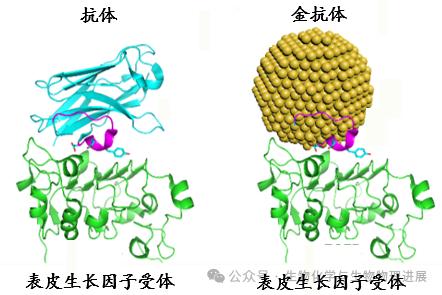
Figure 2: Protein fragments grafted onto gold nanoparticles
If there is still a protein "context" that determines the structure and function of CDR after grafting a CDR fragment of a mouse antibody onto the skeleton of a human antibody, then Professor Cao Aoneng's research group's work of grafting the CDR region of a natural antibody onto the surface of gold nanoparticles to create an artificial nanobody clearly denies the necessity of the existence of a protein sequence "context".
Hypothesis of the lowest energy fragment under restricted domain
On this basis, Professor Cao Aoneng proposed a new protein folding theory: the "Minimum Energy (Structural) Fragment (CLEF) Hypothesis under Restricted Fields" [5-6]. This hypothesis suggests that there are some key long-range interaction sites in the structure of natural proteins, which are equivalent to punctuation marks in the protein sequence book. They read the protein sequence book sentence by sentence into easily understandable sentences - CLEF fragments. The natural conformation of CLEF fragments is the lowest energy conformation under the relevant long-range interaction domains in proteins, and CLEF fragments can adopt different lowest energy conformations under different long-range interaction domains. Similarly, regardless of the context of protein sequences, nanoparticles can be used to simulate the corresponding key long-range forces and restore the natural conformation of CLEF fragments. This is the key mechanism for the successful preparation of gold antibodies.
From gold antibodies to platinum antibodies
The gold antibody successfully validated the validity of the CLEF hypothesis, but on the other hand, the interaction between gold nanoparticles and CLEF fragments is also a key factor in the success of the gold antibody. In order to explore the requirements of conformational reconstruction of protein CLEF fragments on nanoparticles, Cao Aoneng's team successfully reconstructed the natural conformation and function of CDR fragments of anti lysozyme natural antibodies on the surface of platinum nanoparticles through molecular conformational engineering technology, and prepared a new anti lysozyme artificial antibody - platinum antibody (Figure 3). The platinum antibody can specifically bind to lysozyme and significantly inhibit its enzymatic activity, demonstrating that platinum nanoparticles can also serve as suitable conformational engineering scaffolds to reconstruct the natural conformation and function of protein CLEF fragments. (For details, please click on the original link below)
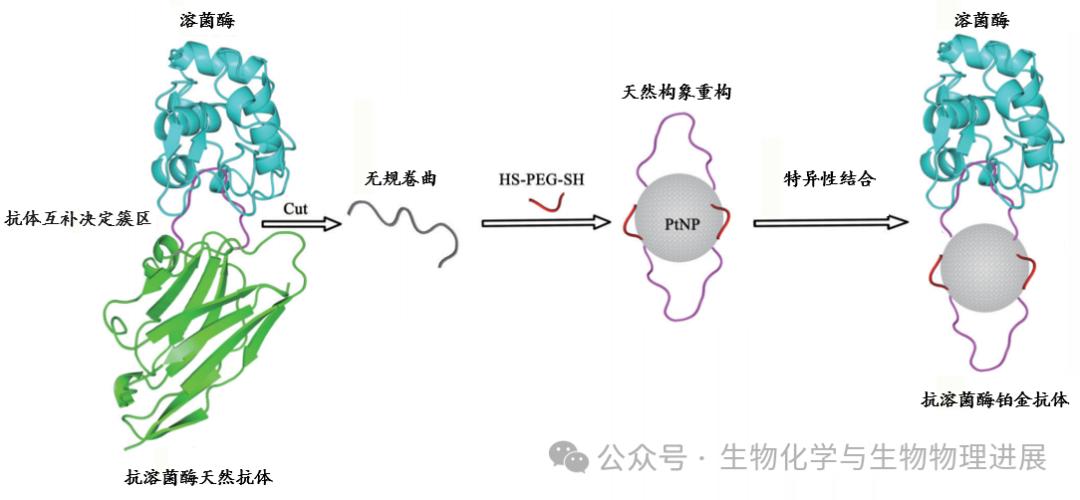
Figure 3 Design scheme of anti lysozyme platinum antibody
Outlook: From protein folding to molecular conformation engineering
The interaction between simple nanoparticles and protein fragments can actually replace the "mysterious" long-range interactions in proteins, causing protein fragments to fold back into their natural conformation and reproduce the functions of natural proteins. This unexpected discovery provides new insights into the folding mechanism of proteins, and the CLEF hypothesis proposed on this basis demonstrates its potential to promote the future development of protein science and related interdisciplinary fields.
The CLEF hypothesis can not only guide the design of artificial proteins using fragments of existing proteins, but also guide the design of artificial proteins based on novel peptide or non peptide molecules. This type of artificial protein not only has the advantages of high specificity and activity of natural proteins, but also overcomes the disadvantages of poor stability of natural proteins. It is expected to replace natural proteins in many fields such as biology, medicine, and catalysis and be widely used.
reference
[1] Sela M, White F H , Anfinsen C B. Reductive cleavage of disulfide bridges in ribonuclease. Science, 1957, 125(3250): 691-692
[2] Morrison S L, Johnson M J, Herzenberg L A, et al. Chimeric human antibody molecules: mouse antigen-binding domains with human constant region domains. Proc Natl Acad Sci USA, 1984, 81(21): 6851-6855
[3] Jones P T, Dear P H, Foote J, et al. Replacing the complementarity-determining regions in a human antibody with those from a mouse. Nature, 1986, 321(6069): 522-525
[4] Yan G H, Wang K, Shao Z, et al. Artificial antibody created by conformational reconstruction of the complementary-determining region on gold nanoparticles. Proc Natl Acad Sci USA, 2018, 115(1): E34-E43
[5] Cao Aoneng The hypothesis of the "lowest energy structural fragment under the restriction of protein structure" and the "Stone Age" of protein evolution Journal of Physical Chemistry, 2020, 36 (1): 103-112
[6] Cao A. The last secret of protein folding: the real relationship between long-range interactions and local structures. Protein J, 2020, 39(5): 422-433

Sun Yiwei
Master's student at Shanghai University
Research direction: Structural or functional recovery of protein fragments
This article is reproduced from the official account "Progress in Biochemistry and Biophysics"
The official subscription account of the Chinese Society of Biophysics serves BSC members and professionals in the field of biophysics.
For submission and authorization, please contact: bscoffice@bsc.org.cn .
Original title: "Frontier Science Popularization: Cracking the Heavenly Book of Protein Folding"
important clause
This article is uploaded and published by the author or organization of the Pengpai account on Pengpai News. It only represents the views of the author or organization and does not represent the views or positions of Pengpai News. Pengpai News only provides an information publishing platform. Please use a computer to access the Pengpai account application http://renzheng.thepaper.cn .