

Dietary restrictions, including intermittent fasting (alternating between fasting and eating), are generally believed to improve health. Many studies have shown that fasting can prolong the lifespan of various experimental organisms. Many prospective clinical trials also show that fasting can reduce the risk factors of aging related diseases, including cardiovascular disease, diabetes and cancer. Fasting can also increase resistance to various oxidative stresses, such as acute surgical stress. Even studies have shown that fasting can enhance the effectiveness of cancer treatment.
However, due to the complex and unresolved mechanisms of extending lifespan, it is still unclear whether different types of dietary restrictions extend lifespan in the same way. If specific nutritional components related to extending lifespan can be identified in dietary restrictions, a more targeted and feasible dietary restriction strategy can be defined.
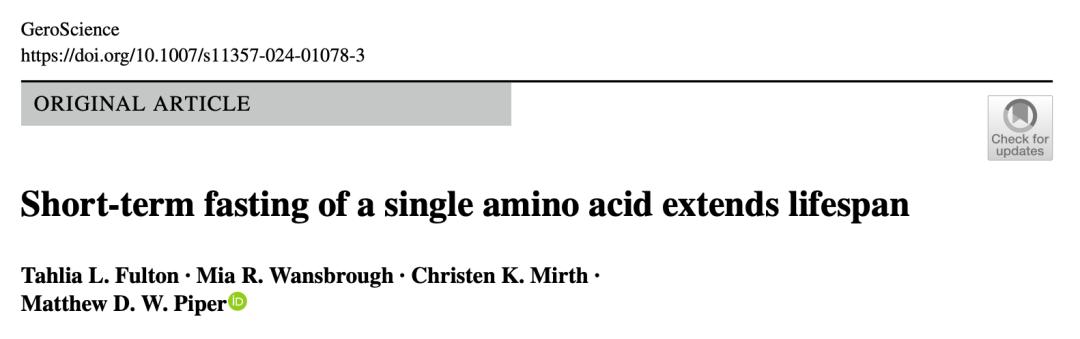
On February 2, 2024, researchers from Monash University published a research paper titled "Short term fast of a single amino acid extends life span" in the journal GeroScience.
The research team found in the model organism fruit fly that intermittent and short-term deprivation of essential amino acid isoleucine (i.e. lack of isoleucine in the diet) can significantly improve its stress resistance and prolong its lifespan, opening up new avenues for understanding the impact of diet on longevity and health.
This study has found a simpler alternative to traditional intermittent fasting, providing new possibilities for extending lifespan and promoting healthy aging.
The research team stated that unlike traditional intermittent fasting, this method does not require a significant reduction in overall food intake, making it a more practical and feasible strategy. This study not only expands our understanding of the impact of diet on lifespan, but also has the potential to revolutionize our understanding of the benefits of diet on longevity.
Previous studies have shown that moderate restriction of all dietary amino acids can lead to stress resistance, but to increase lifespan, it still needs to be persisted for a long time in adulthood.
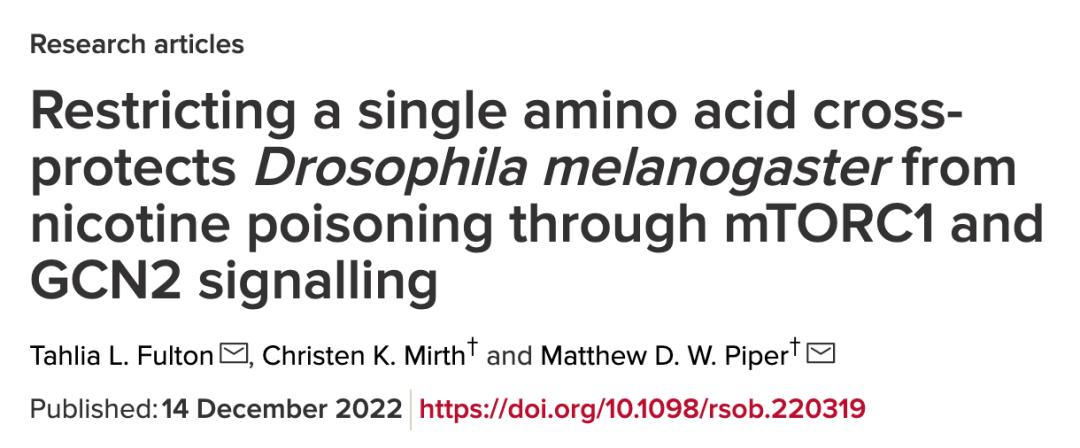
The team published a paper in the Open Biology journal in December 2022, which found that short-term deprivation of a single essential amino acid can enhance the tolerance of young adult fruit flies to the toxic substance nicotine. However, the effectiveness of this approach in elderly fruit flies and how it affects long-term health are currently unclear.
The research team stated that we do not yet know whether depriving a single amino acid in a short period of time will also extend lifespan. If so, when should amino acids be restricted and for how long? This requires further exploration.
To investigate this, the research team first evaluated whether fruit flies can acquire nicotine tolerance by temporarily restricting isoleucine intake as they age. They maintained fruit flies in a nutritionally complete synthetic diet for one, two, three, or five weeks (with an average lifespan of about nine weeks), then transferred them to a diet lacking isoleucine for one, three, five, or seven days, and measured their survival rates when exposed to lethal doses of nicotine.
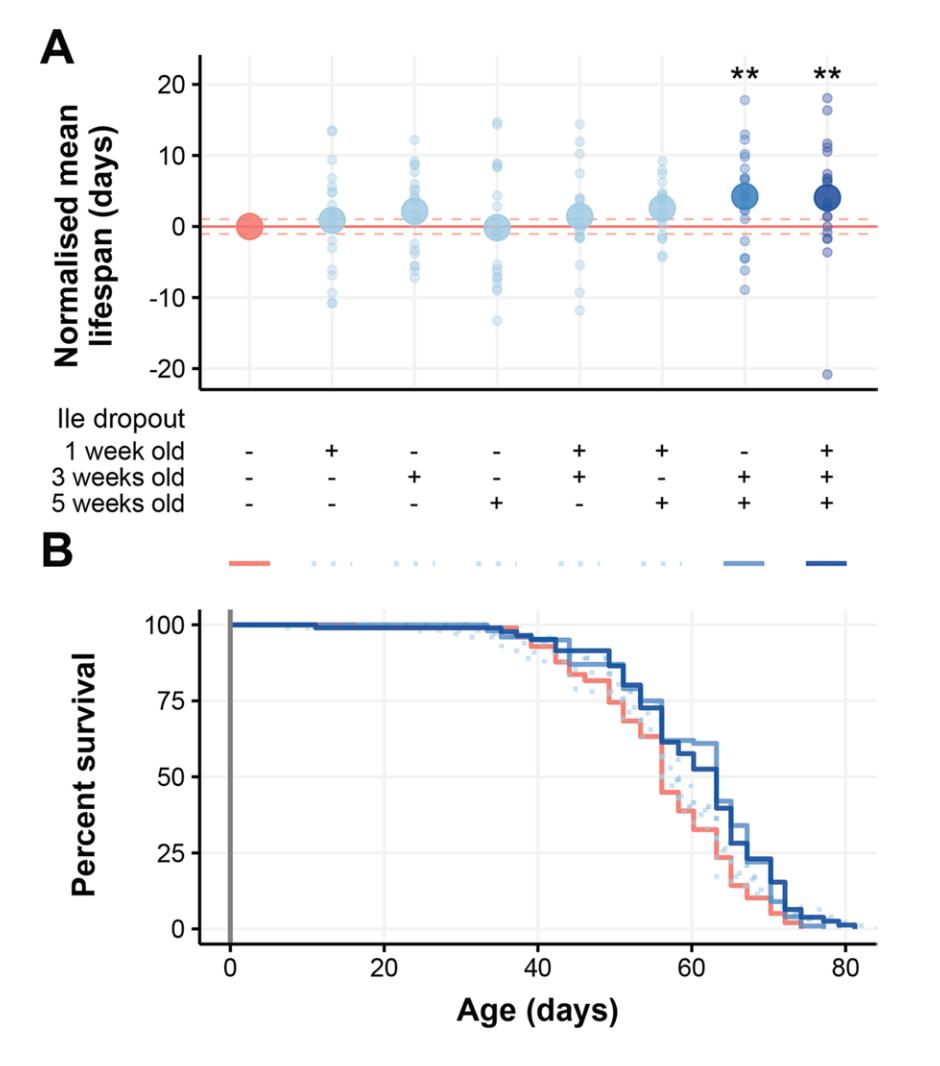
Using this data to select the treatment plan that provides the best toxin protection, the research team found that restricting fruit flies to a one week isoleucine diet during mid life (three weeks) and late life (five weeks) significantly extended their lifespan, regardless of their diet in early and late life.
The research team further revealed the mechanism by which short-term restriction of isoleucine can prolong lifespan. They found that endogenous damage in fruit flies is cleared during isoleucine restriction, and these effects accumulate to produce beneficial outcomes for lifespan. The reasonable mechanism explanation for this is that isoleucine restricts diet and activates the integrated stress response (ISR) through intracellular amino acid sensors and kinase GCN2, which reduces global translation by phosphorylating eukaryotic translation initiation factor eIF2 α. eIF2 α also induces autophagy by inhibiting mTORC1. Overall, these processes briefly induce autophagy, enhance protein homeostasis, and thus inhibit aging.
This discovery challenges the existing concept of the strictness of dietary adjustments for longevity and health benefits, as this relatively lenient isoleucine restriction diet can bring benefits similar to those of traditional fasting, which is a broader dietary restriction.
The research team stated that this study not only advances our understanding of the impact of diet on the lifespan of fruit flies, but also proposes a new and simpler approach for aging research in other species. Specific amino acid restrictions as a feasible alternative to intermittent fasting have opened the door for more targeted dietary intervention mechanism research.
Paper link:
1. https://link.springer.com/article/10.1007/s11357-024-01078-3
2. https://royalsocietypublishing.org/doi/10.1098/rsob.220319
(This article is from Pengpai News. For more original information, please download the "Pengpai News" app)